
Historical Sites
The rich history of the Limpopo region
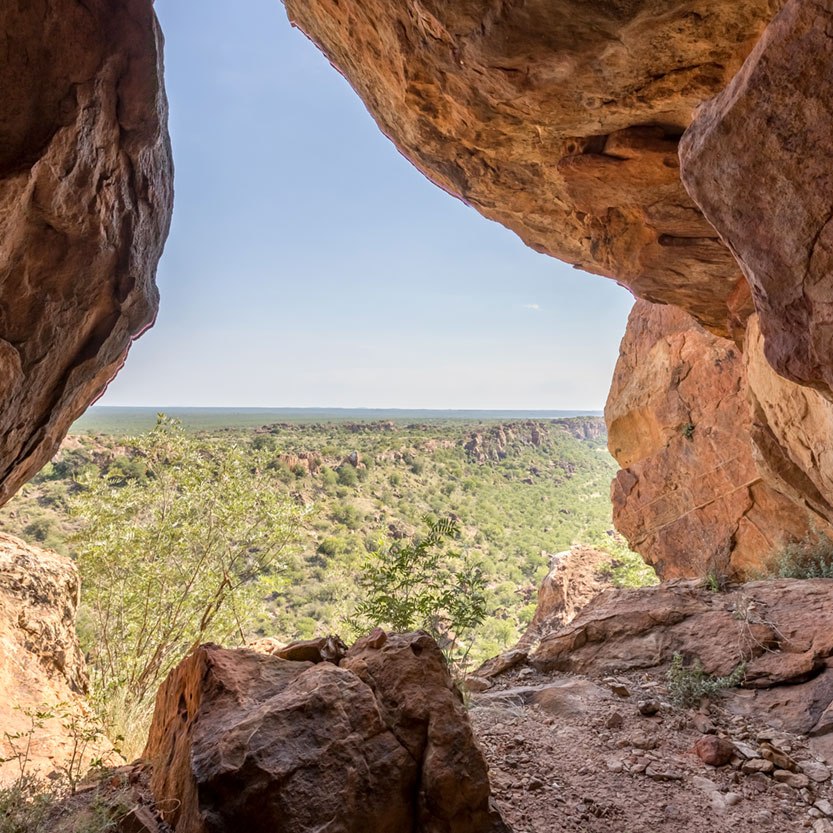
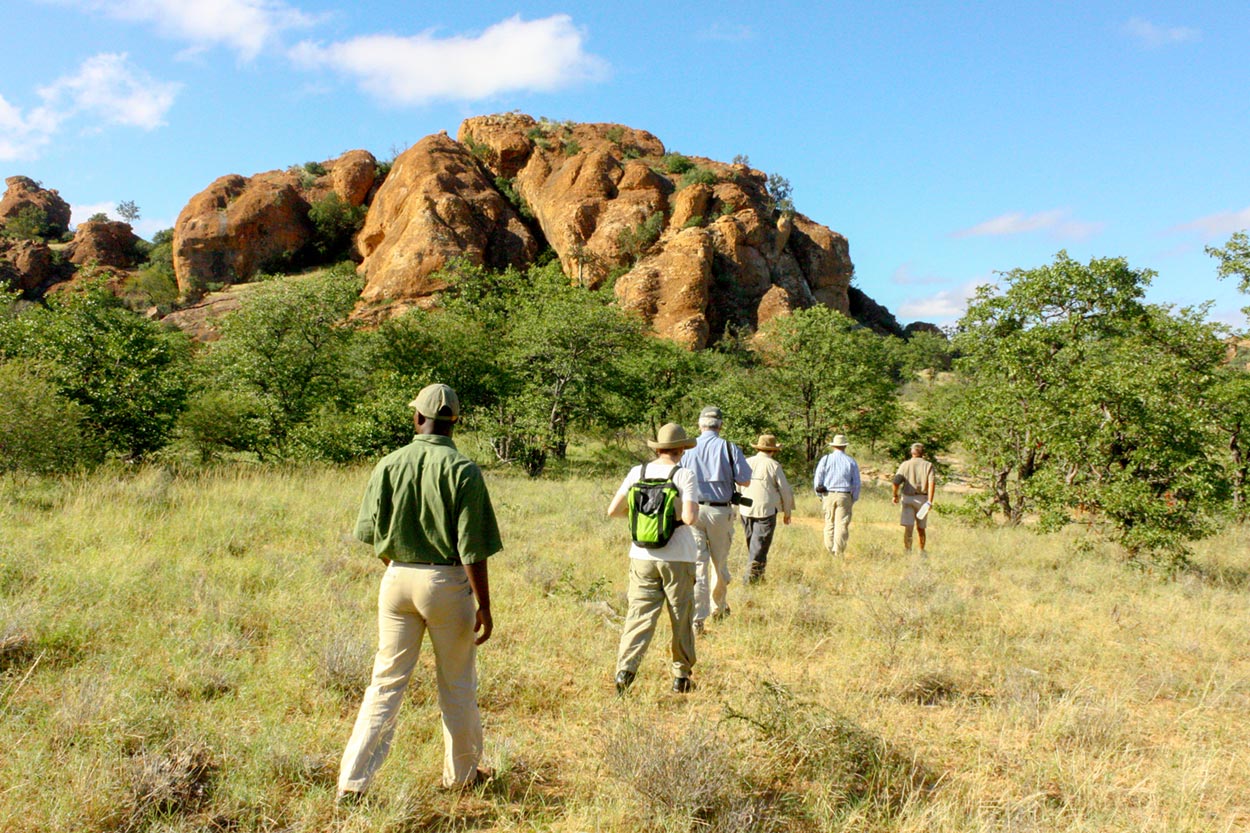
There are numerous archaeological sites on Sentinel Ranch, pristine and well-protected. Guests must be accompanied to sites at all times, and we are careful never to touch or deface the rock or remove any artefacts from the sites. Professional research is welcome, but must be pre-arranged and registered with the department of National Museums & Monuments of Zimbabwe.
Stone Age
There are sites on Sentinel that testify to the presence of Middle Stone Age peoples inhabiting the area – 100,000 years before the present day. Hand axes, stone points and scraping tools are numerous, and all are recognized to be ancient from their rough, weathered appearance.
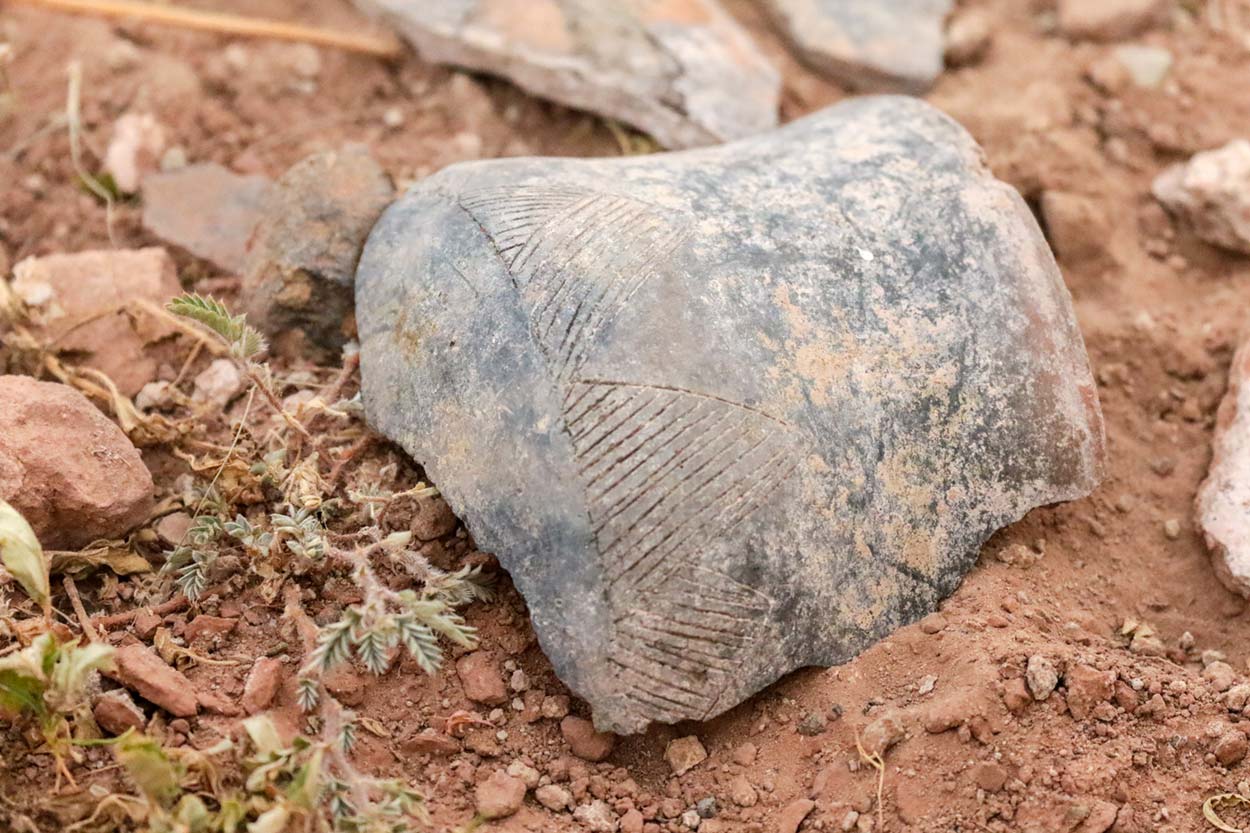
Iron Age
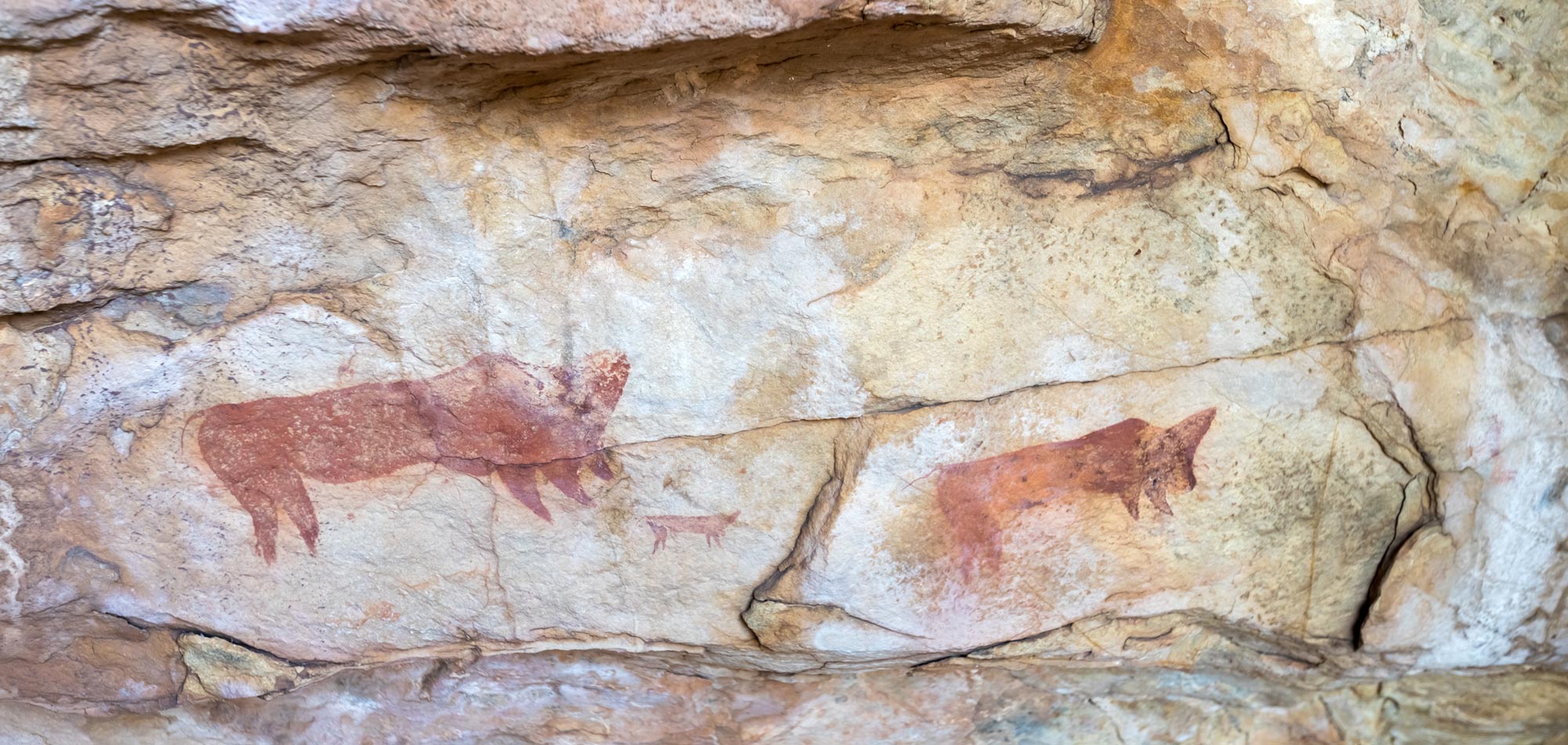
Over the past few thousand years San people have also left a rich legacy of rock art throughout the area.
Once believed to be narratives of hunt scenes, it is now certain that the paintings had a more ceremonial significance.
Ed Eastwood, in conjunction with the University of the Witwatersrand, has undertaken extensive research on the paintings on Sentinel. When one ties the art up with ethnographic studies of Bushman spiritual and religious practices and belief systems it is clear that the plethora of certain animals, enigmatic ‘Y-shapes’, male and female dancing figures correspond to male and female rites of passage. It is also thought that some animals, like the elephant, kudu, eland and giraffe, held special spiritual significance.
More on Ed & Cathelijne Eastwood’s findings in their wonderful book Capturing the Spoor: An exploration of southern African rock art.
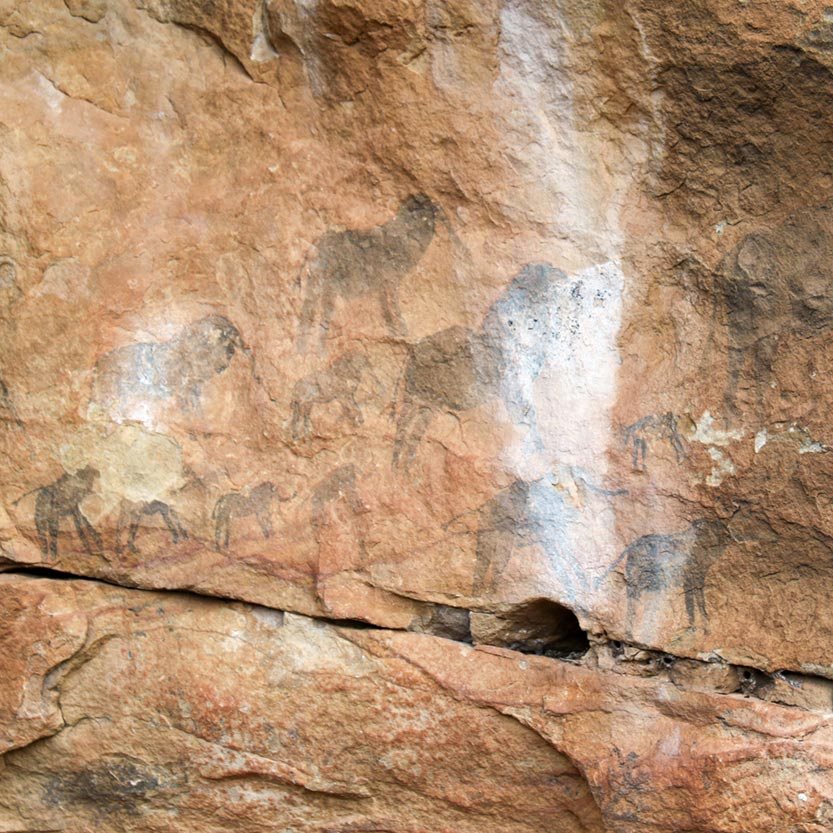
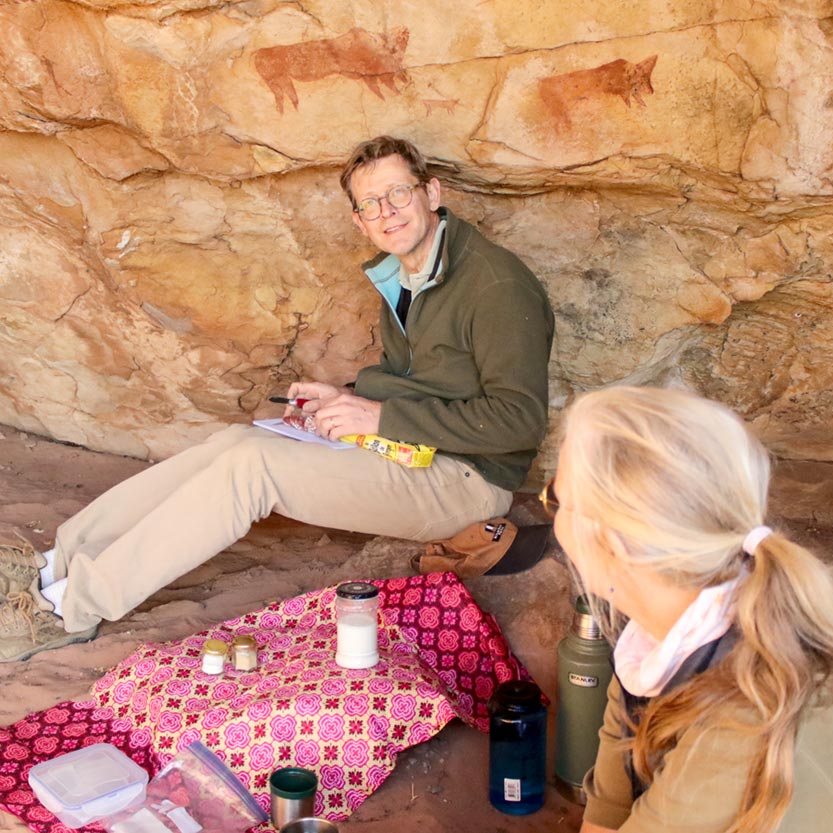
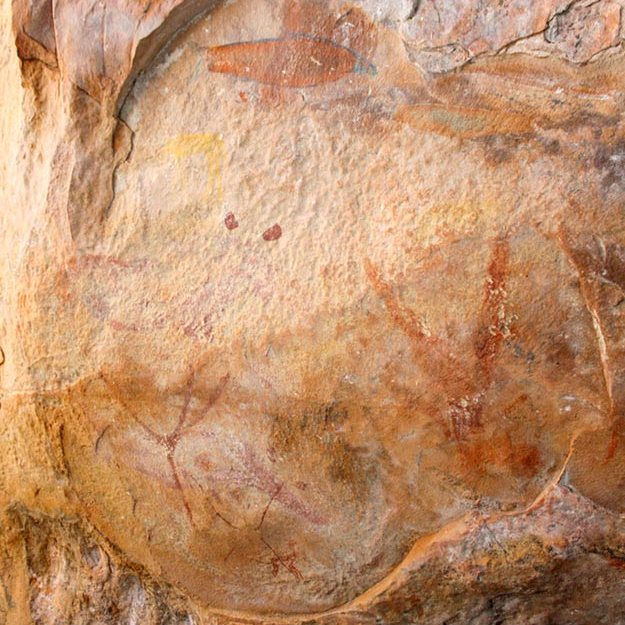
It is widely agreed that the art was done by Shamans (priests), who illustrated their visions of a state of elevated consciousness (trance) that was induced by ceremonial dance. Most of the large animal renditions on the property have red dorsal lines that are believed to correspond with “ki”, an energy or heat that ran up and down the spine of the Shaman during the trance state. It is thought that these painted animals symbolise the Shaman’s experience of trance.
Of the 40 or so known sites on Sentinel and Nottingham (our neighbours to the east), guests are most likely to visit:
- The Mandiego Shelter – exhibiting a meticulously detailed antelope, giraffe and saddle-bill stork in polychrome
- The Phai River I and II sites – depicting kudus, elephants, fish and women
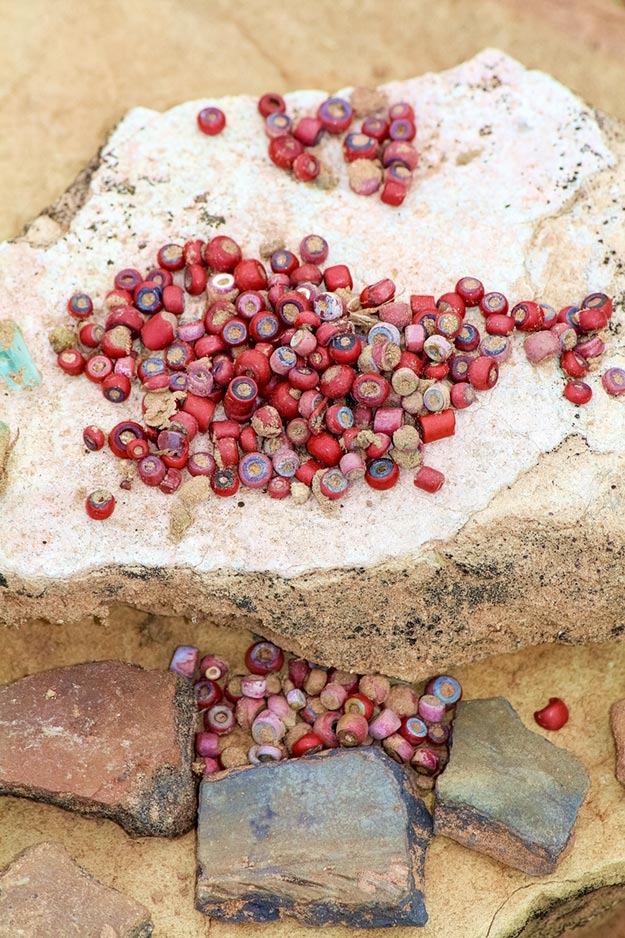
- The Pimwa Site – with its frieze of 15 elephants, a particularly interesting shelter, as the floor is generously littered with stone artefacts, grinding stones, and ostrich eggshell beads
- Mpato Shelter – renowned for its rare green fish and kingfishers (painted with a copper oxide)
- Tswainne – buffalo and dancing men and women
- Eland Shelter – three headless eland, with delicately painted hocks and tails, and two bushman hunters on either side of them
- Trance Dance Krantz (by special arrangement) – one of the most splendid and richly painted sites in the Valley, with over 200 animal and human figures on a 150m long sandstone massif rising out of the landscape
- Shaman Shelter – depicting a therianthrope, a half human, half animal figure
- Dragon’s Back Shelter – featuring engravings of animals spoor and cupules
- Tobwani – where more recent white finger paintings of suns are super-imposed on earlier San paintings
You can find out more about the iron-age, Mapungubwe and later European settlement of the region here.
 Sentinel Limpopo Eco Safaris